Medical tubing looks simple, but its performance depends on several interacting variables. Material selection, inner diameter, wall thickness, pressure, temperature, sterilization, and fluid chemistry can change outcomes. A tube that remains flexible on the bench may kink inside a compact infusion system. Small dimensional changes can also affect flow, leakage, and connector security.
This article explores what factors affect the performance of medical tubing through seven practical considerations. The U.S. Food and Drug Administration emphasizes risk-based evaluation, process control, and biocompatibility for patient-contacting materials. ISO 10993-1 also requires manufacturers to assess biological risks within the device’s intended use. Grand View Research identifies rising demand for medical tubing in catheters, drug delivery systems, and minimally invasive devices. That growth increases pressure for reliable, traceable material choices.
Dr. Buddy D. Ratner, a recognized biomaterials expert, has stated, “A biomaterial must be evaluated in the context of its biological environment.” His point applies directly to tubing design. Mechanical strength alone is not enough. A silicone tube, for example, may tolerate repeated bending but absorb certain chemicals. A polyurethane tube may provide better abrasion resistance, yet respond differently to sterilization. These trade-offs are easy to underestimate. No checklist is perfect. Real performance also depends on manufacturing variation, aging, storage, and clinical handling. The following seven tips connect laboratory evidence with practical medical-device experience. They also encourage engineers to question assumptions before a tubing design reaches patients.
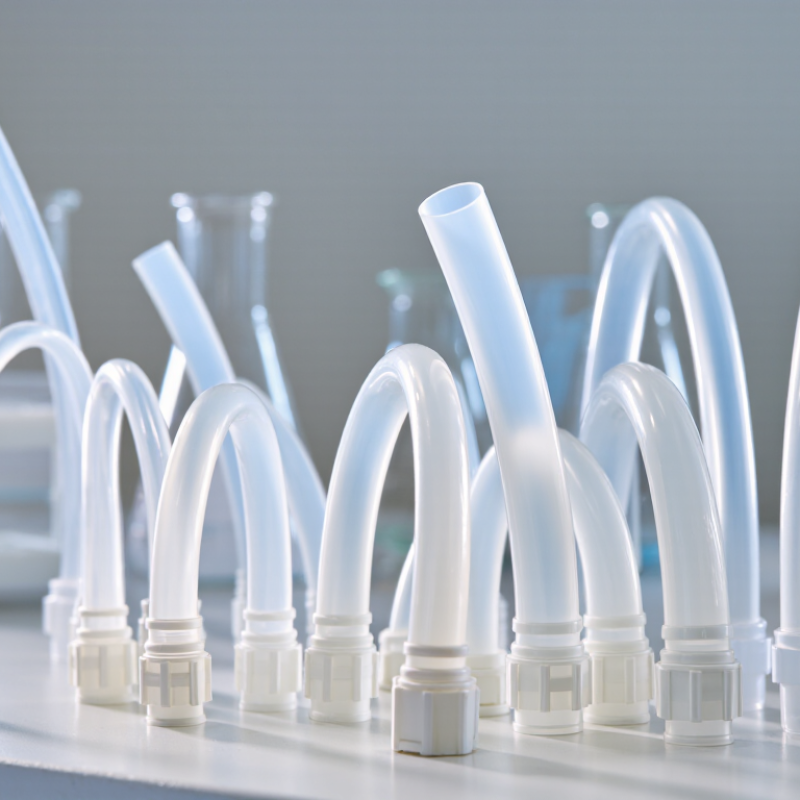
Medical Tubing Materials and Their Performance Characteristics
7 Tips What Factors Affect Medical Tubing Performance?
Medical Tubing Materials and Their Performance Characteristics
Medical tubing performance begins with material selection. Silicone offers excellent flexibility and temperature stability. However, it can allow more gas movement than some alternatives. Polyurethane provides strong abrasion resistance and smooth handling. It may soften under certain chemicals or temperatures. PVC can balance cost, clarity, and stiffness, but plasticizer selection affects flexibility and extractables. Fluoropolymer tubing resists many chemicals, yet it is often less flexible. Small differences matter.
Tip 1: Match the material to the fluid, temperature, and pressure. A tube carrying a cold saline solution faces different demands from one exposed to warm air. Check swelling, cracking, and permeability during realistic testing. Tip 2: Consider repeated bending. A tube may pass a static pressure test but kink near a connector. That failure is easy to miss.
Surface finish, inner diameter, wall thickness, and reinforcement also influence performance. Smooth inner walls can support steady flow and reduce residue retention. Thicker walls improve pressure resistance but may reduce flexibility. Sterilization can change hardness, color, or tensile strength. Testing should include aging cycles, not only fresh samples. Tip 3: Inspect tubing after sterilization and repeated use simulations. I have seen designs that looked reliable on paper but became cloudy and stiff afterward. That result deserves review, not excuses. Measurement errors also happen, especially when soft tubing is compressed during testing. Use controlled fixtures and record the test conditions carefully.
Dimensional Design, Wall Thickness, and Flow Requirements
7 Tips: What Factors Affect Medical Tubing Performance?
Dimensional design sets the foundation for reliable medical tubing. The outer diameter must fit connectors, clamps, and routing spaces without forcing the tube into sharp bends. The inner diameter directly controls usable flow area. Small changes can create noticeable pressure differences, especially in narrow tubes. Define tolerances early, not after tooling begins. A neat drawing can still fail during assembly.
Wall thickness affects flexibility, strength, and resistance to collapse. A thin wall bends easily but may kink under suction or tight routing. A thicker wall improves support, yet it can reduce flexibility and increase the required bending force. Measure tubing at several points around its circumference. Ovality is easy to overlook. It can change connector fit and produce uneven flow. Temperature also matters because some polymers soften during sterilization or clinical use.
Flow requirements should be tested under realistic conditions. Water at room temperature may not represent a viscous fluid, pulsating pump, or elevated temperature. Record flow rate, pressure drop, tube length, and connection style. Reynolds number can help assess whether flow is likely to be laminar or turbulent, but it should not replace physical testing. Practical evaluations often reveal an uncomfortable detail: the specified diameter may perform well alone, but poorly after bending and installation. That result deserves review, not excuses.
Chemical Compatibility and Resistance to Sterilization
7 Tips: What Factors Affect Medical Tubing Performance?
Chemical Compatibility and Resistance to Sterilization
Medical tubing can look unchanged after sterilization, yet its performance may have shifted. Chemical exposure, heat, radiation, and repeated processing can alter flexibility, strength, and extractables. Tip 1: Identify every fluid contacting the tube. Include drugs, cleaning agents, lubricants, and residues. Tip 2: Check concentration, temperature, pressure, and contact time. Small changes can produce large effects. Tip 3: Review swelling, cracking, discoloration, and stiffness after exposure. Visual inspection alone is insufficient, but it can reveal early warning signs.
Tip 4: Match the tubing material with the sterilization method. Steam may stress heat-sensitive materials. Radiation can embrittle some polymers. Chemical sterilants may leave residues or change surface properties. Validate the complete cycle, not only the nominal temperature. Test samples after the worst realistic exposure. This is where many evaluations become too optimistic. A single cycle may not represent storage, transport, and repeated use.
Tip 5: Measure tensile strength, elongation, burst pressure, and flow before and after sterilization. Tip 6: Examine connections, bends, and thin-wall sections carefully. Failure often begins there. Tip 7: Confirm chemical resistance using representative fluids and independent laboratory methods. Document lot variation and aging conditions. I would not rely on a compatibility table alone. It provides direction, not proof. Recheck assumptions when the formulation, sterilization cycle, or intended use changes.
Temperature, Pressure, and Mechanical Stress Effects
7 Tips: What Factors Affect Medical Tubing Performance?
Temperature changes can quietly reduce tubing strength. ISO 17665 describes moist-heat sterilization cycles commonly reaching 121–134°C. Such exposure may harden, soften, or embrittle polymers.
Tip one: record every sterilization cycle.
Tip two: test tubing after conditioning, not only when new.
The Plastics Pipe Institute’s TR-4 data tables also show pressure ratings decline as operating temperature rises. Use the exact material grade, not a generic temperature chart.
Tip three: apply a temperature-based pressure derating factor.
Pressure and mechanical stress often act together. A pump may create repeated pressure pulses, while a tight bend concentrates stress near the connector.
Tip four: verify burst and cyclic-pressure performance using controlled test methods, such as ASTM D1599 principles where applicable.
Tip five: measure the real bend radius during assembly.
A tube can pass a static test and still fail after thousands of cycles. ISO 8536-4 leakage and pressure requirements provide useful reference points for fluid-transfer sets, although they do not replace product-specific validation.
Tip six: inspect fittings for ovalization, whitening, or tiny surface cracks.
Tip seven: test the complete assembly, including clamps and connectors.
A 2023 review in the Journal of Medical Devices noted that boundary conditions strongly influence polymer fatigue results. That finding deserves attention.
Laboratory fixtures are often cleaner than clinical use. Human handling is less predictable. Temperature, pressure, and bending should therefore be tested together, with documented tolerances and failure criteria.
Surface Quality, Biocompatibility, and Tubing Performance Testing
Medical tubing performance depends on more than size and flexibility. Surface quality, biocompatibility, and testing conditions can change clinical reliability.
Inspect the inner and outer surfaces for scratches, particles, bubbles, and uneven walls. Small defects matter. Rough surfaces may increase friction, trap residue, or disturb fluid flow. Measure diameter, wall thickness, ovality, tensile strength, and kink resistance across several samples. A single excellent sample proves very little. Manufacturing records should also track material batches, processing temperatures, and storage time.
Biocompatibility requires more than selecting a medically accepted polymer. Evaluate cytotoxicity, sensitization, irritation, hemocompatibility, and chemical extracts under the intended use conditions. Sterilization can alter flexibility, color, or surface chemistry. Testing must reflect use. For pressure tubing, apply repeated pressure cycles and inspect for leaks. For infusion tubing, test flow rates, particulates, and connections after aging. Visual checks alone remain insufficient, although they are often treated as decisive.
Reliable testing uses documented methods, calibrated equipment, defined acceptance limits, and traceable results. Independent laboratory review can strengthen technical credibility. I have seen teams focus heavily on tensile strength while overlooking connector fatigue. That oversight can become important during real handling. Testing plans should challenge the tubing after bending, sterilization, temperature changes, and extended storage. Results need careful interpretation, because one test condition rarely represents every clinical environment.
FAQS
Outer diameter must fit connectors, clamps, and routing spaces. Inner diameter controls usable flow area. Small changes can increase pressure drop.
Thin walls bend easily but may kink during suction or tight routing. Thick walls resist collapse but require more bending force. Neither choice is perfect.
Measure wall thickness and ovality at several points around the circumference. An oval tube may fit poorly and create uneven flow.
Test with realistic fluid, temperature, tube length, bends, and connection styles. Record flow rate and pressure drop. Water at room temperature may mislead.
No. Reynolds number can suggest flow behavior, but it cannot reproduce every installation condition. A straight tube may perform poorly after bending.
Inspect for scratches, particles, bubbles, and uneven walls. Rough inner surfaces can increase friction or trap residue. Small defects matter.
Evaluate cytotoxicity, sensitization, irritation, hemocompatibility, and chemical extracts. Conditions should match intended use, storage, and sterilization.
Use calibrated equipment, documented methods, acceptance limits, and traceable results. Test bending, pressure cycles, sterilization, temperature changes, and aging. Visual inspection alone is insufficient.
Conclusion
Medical tubing performance depends on several interconnected factors, beginning with the material selected for its flexibility, strength, transparency, chemical resistance, and intended medical application. Dimensional design is equally important: inner diameter, outer diameter, wall thickness, and surface uniformity influence fluid flow, pressure handling, bending behavior, and connection reliability. The tubing must also remain stable when exposed to medications, bodily fluids, cleaning agents, and sterilization processes.
Other major considerations include operating temperature, internal pressure, repeated flexing, crushing, vibration, and tensile stress. A smooth, clean surface can support consistent flow and reduce the risk of particle retention, while biocompatibility is essential for safe contact with patients or medical fluids. To understand what factors affect the performance of medical tubing, manufacturers and engineers should evaluate material properties, dimensional accuracy, chemical compatibility, sterilization resistance, mechanical durability, and biological safety through appropriate testing. These combined assessments help ensure dependable performance throughout storage, handling, and actual use.

 Ryu Medical